

by Nereida Hayes
When I was fifteen, I thought exhaustion was simply part of being a student, late nights, endless assignments, and too little sleep. But eventually, the tiredness became something heavier. My joints ached constantly. Fevers came and went without warning. A rash spread across my skin and refused to disappear. Months passed before a doctor finally spoke the word lupus into the sterile silence of the examination room.
At first, I barely understood what it meant. All I heard were the words chronic, lifelong, incurable. They sounded final, like doors quietly closing one after another. On the drive home, I sat in silence staring out the car window, feeling as though the world had continued moving forward while I had somehow been left behind.
The depression arrived slowly, almost unnoticed at first. It was more than sadness; it felt like mourning the person I thought I was supposed to become. My body no longer felt familiar. Some mornings I woke up swollen and aching, too weak to carry my backpack without pain. Other days, I canceled plans because even getting out of bed felt impossible.
At night, I cried quietly into my pillow, wondering if life would ever feel normal again. My mother would sit beside me, brushing my hair back gently and reminding me that lupus did not define who I was. I wanted to believe her, but everything around me seemed reduced to medications, blood tests, appointments, and uncertainty.
Then, during one hospital stay, a nurse asked if I wanted to join an art therapy session down the hall. I nearly refused. But there was something calm and reassuring in her voice that made me say yes.
That afternoon, I painted for the first time in years.
I chose purple, the color associated with lupus awareness, and covered the paper in uneven strokes and blurred edges. As the brush moved across the canvas, something inside me loosened. For the first time in months, I felt present instead of afraid.
That was the beginning of my acceptance.
Not surrender, but acceptance.
I realized that living with lupus was not about returning to the person I used to be. It was about learning to embrace the person I was still becoming.
I still grieve parts of my old life, the version of me that moved freely without thinking twice about her body. But over time, grief softened into understanding. I began to notice beauty in slower mornings, quiet resilience, and the courage it takes to keep going even when uncertainty remains.
Lupus still remains part of my life, sometimes red with pain, but I have learned to answer it in purple.
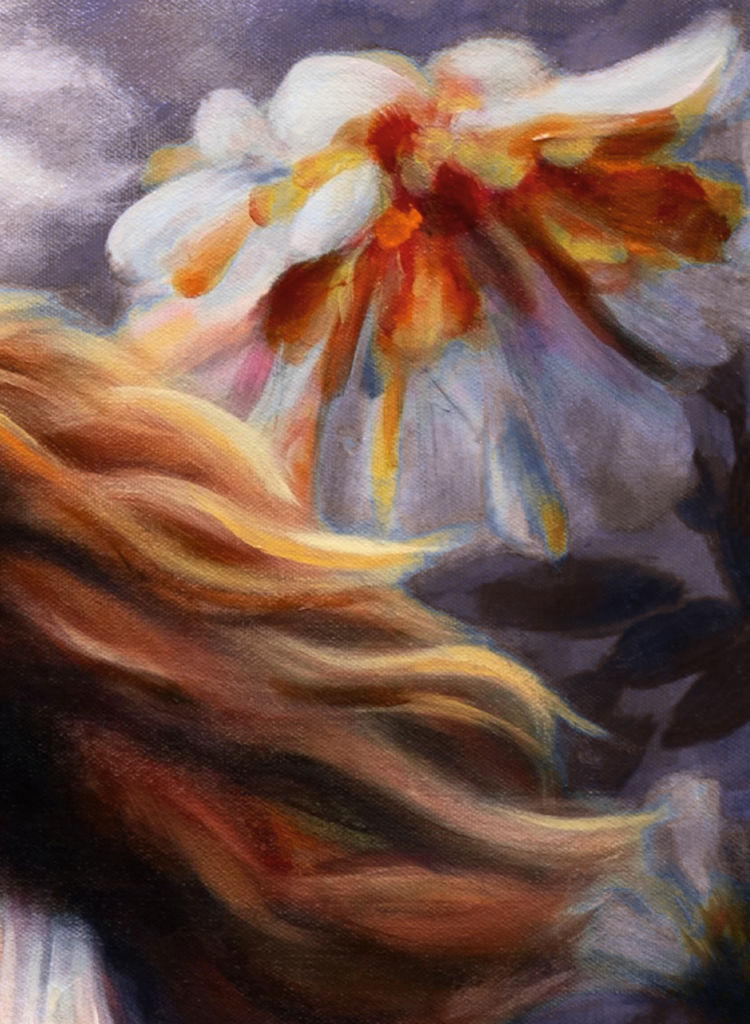
Art by Alexiss Malolo, “Where Stillness Blooms“
About the Author
Nereida expresses fear, sadness, and other quiet emotions through reflective verses, turning inner feelings into honest, lyrical poetry.