

How New Gene-Editing Technologies Are Expanding the Future of Precision Medicine
by Johan Aydin
The development of CRISPR-Cas9 transformed modern genetics by giving scientists the ability to edit DNA with unprecedented precision. Often described as “molecular scissors,” CRISPR allowed researchers to cut specific regions of DNA and modify genetic sequences associated with disease. However, despite its revolutionary impact, traditional CRISPR editing still presents limitations, including unintended mutations and challenges involving precise DNA repair.
Now, a new generation of gene-editing technologies, known as base editing and prime editing, is rapidly advancing the field of genomics and precision medicine. These techniques aim to correct genetic mutations more accurately and with fewer disruptions to the genome, potentially opening new possibilities for treating inherited diseases.
Base editing, first developed in 2016, allows scientists to directly convert one DNA base into another without cutting both strands of DNA. Instead of creating a full break in the genetic sequence, base editors chemically rewrite individual letters of the genetic code. This is particularly significant because many inherited diseases are caused by single-letter mutations within DNA.
Researchers are currently investigating base editing for disorders such as sickle cell disease, beta thalassemia, familial hypercholesterolemia, and certain forms of inherited blindness. Early clinical trials have already shown promising results. In 2023 and 2024, scientists reported successful experimental applications of base editing in correcting disease-causing mutations within human cells, marking a major milestone in therapeutic genomics.
Prime editing, introduced in 2019, expands this precision even further. Often referred to as a search-and-replace system for DNA, prime editing allows researchers to insert, delete, or rewrite specific genetic sequences with greater flexibility than earlier CRISPR systems. Unlike conventional CRISPR methods, prime editing reduces the need for double-stranded DNA breaks, lowering the risk of unintended genomic damage.
Scientists believe prime editing may eventually address thousands of known disease-causing genetic mutations. Because many inherited disorders arise from highly specific sequence errors, technologies capable of precise correction could fundamentally change how medicine approaches genetic disease treatment.
Beyond inherited disorders, these technologies may also influence cancer research, regenerative medicine, and organ transplantation. Researchers are exploring whether gene editing could enhance immune cells used in cancer immunotherapy, engineer transplant-compatible tissues, or even reduce the risk of certain viral infections.
At the same time, the rapid advancement of genome editing continues to raise ethical and societal concerns. Questions surrounding accessibility, affordability, long-term safety, and the possibility of germline editing remain central to ongoing debates in bioethics. While therapeutic applications aimed at treating severe diseases are widely supported, many scientists remain cautious about editing genes in embryos or making heritable modifications that could affect future generations.
These developments reflect a broader transformation occurring throughout biology and medicine. Gene editing is no longer viewed simply as an experimental laboratory technique, it is increasingly becoming a clinical reality. Technologies such as base editing and prime editing are moving genomics closer toward highly personalized medicine, where diseases may eventually be treated at the level of the genetic code itself.
As research continues to progress, scientists may be entering an era in which some inherited diseases are not only manageable, but potentially correctable. The ability to rewrite sections of DNA with increasing precision represents one of the most significant scientific breakthroughs of the twenty-first century, with implications that may reshape medicine for generations to come.
References
- Komor, A. C. et al. “Programmable editing of a target base in genomic DNA without double-stranded DNA cleavage.” Nature (2016).
- Anzalone, A. V. et al. “Search-and-replace genome editing without double-strand breaks or donor DNA.” Nature (2019).
- National Human Genome Research Institute; Genome Editing Overview.
- New England Journal of Medicine; Recent Clinical Advances in Gene Editing Therapies.
- Doudna, J. A., Charpentier, E. The New Frontier of Genome Engineering with CRISPR-Cas9.” Science (2014).
- National Institutes of Health (NIH); Gene Editing and Precision Medicine.
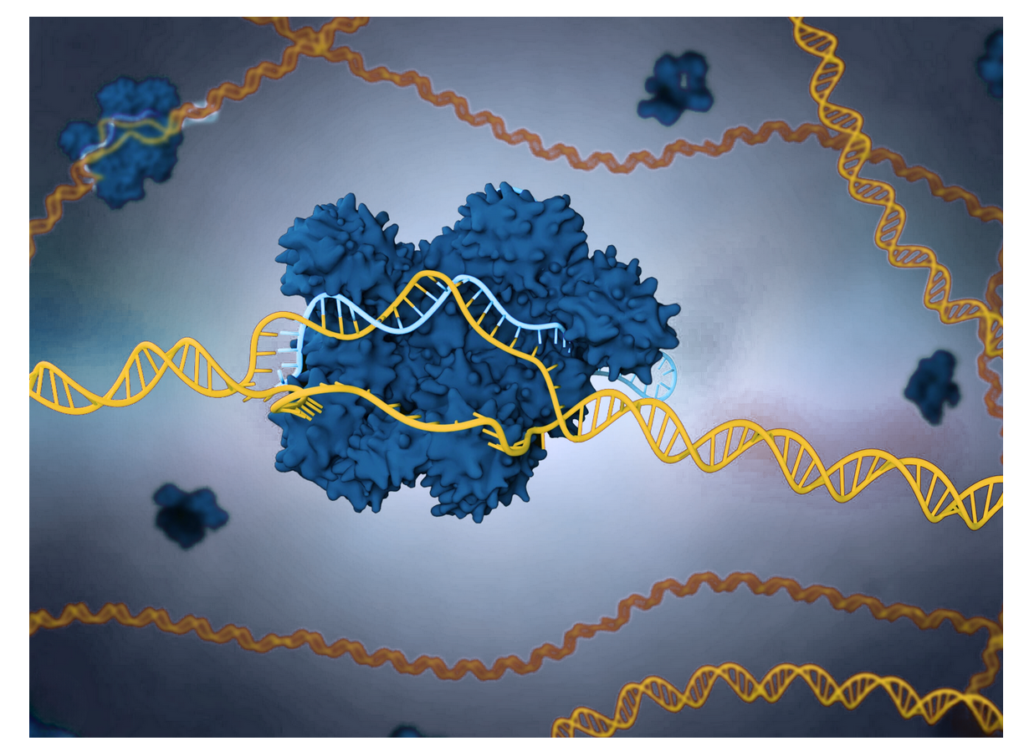
Art by Johan Aydin
About the Author
Johan is a member of the Turkish Academy of Sciences and a writer interested in genetics, genomics, and emerging advances in biomedical science.